Part of our guide to the virtual office in Chicago. More guides on this topic
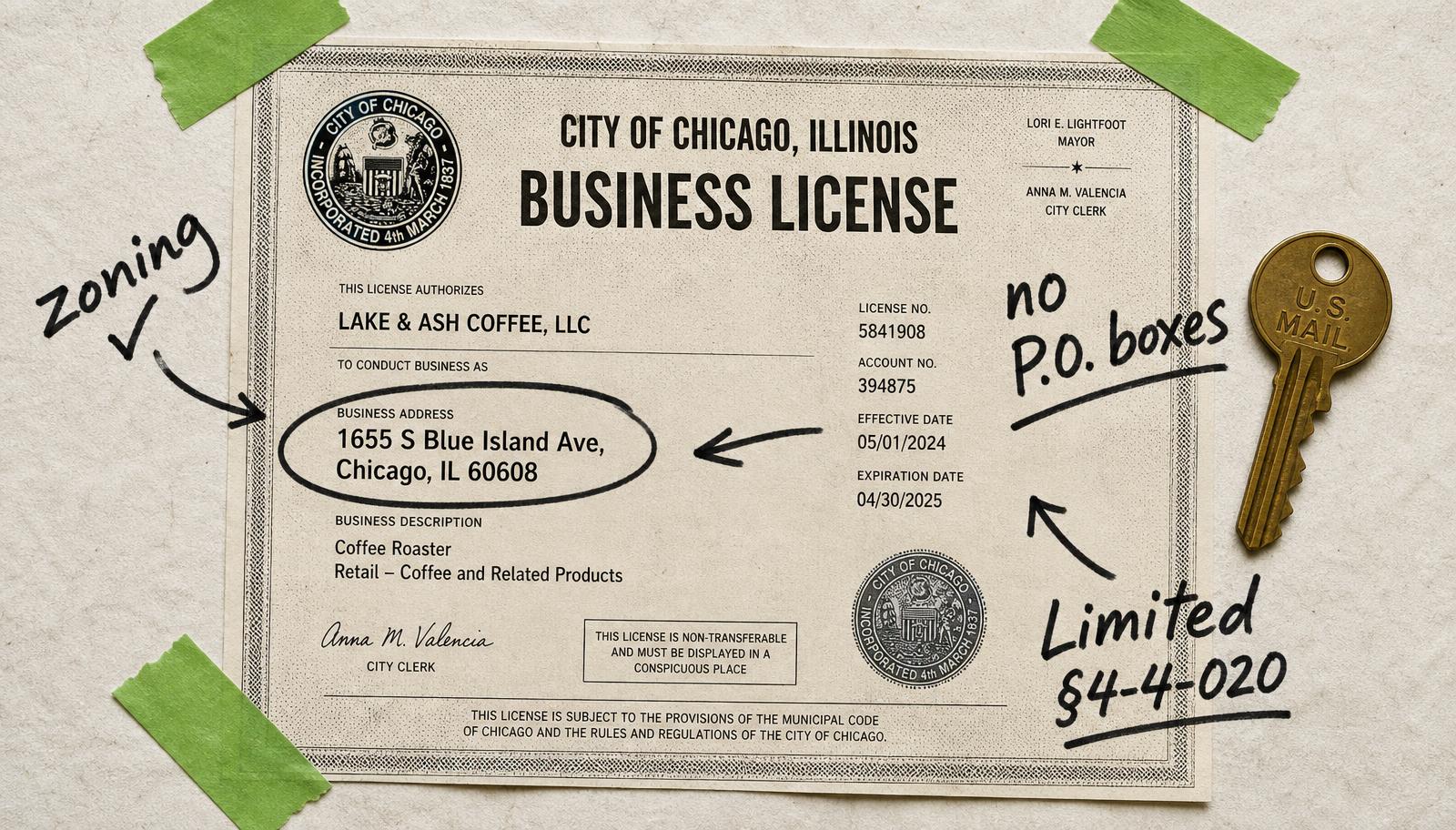
Every Chicago business license application eventually arrives at the same question, and it's not the one applicants worry about. It's not your business plan. It's not your fees. It's your address. The City of Chicago ties every license to a physical location and reviews that location against the zoning code before anything else moves.
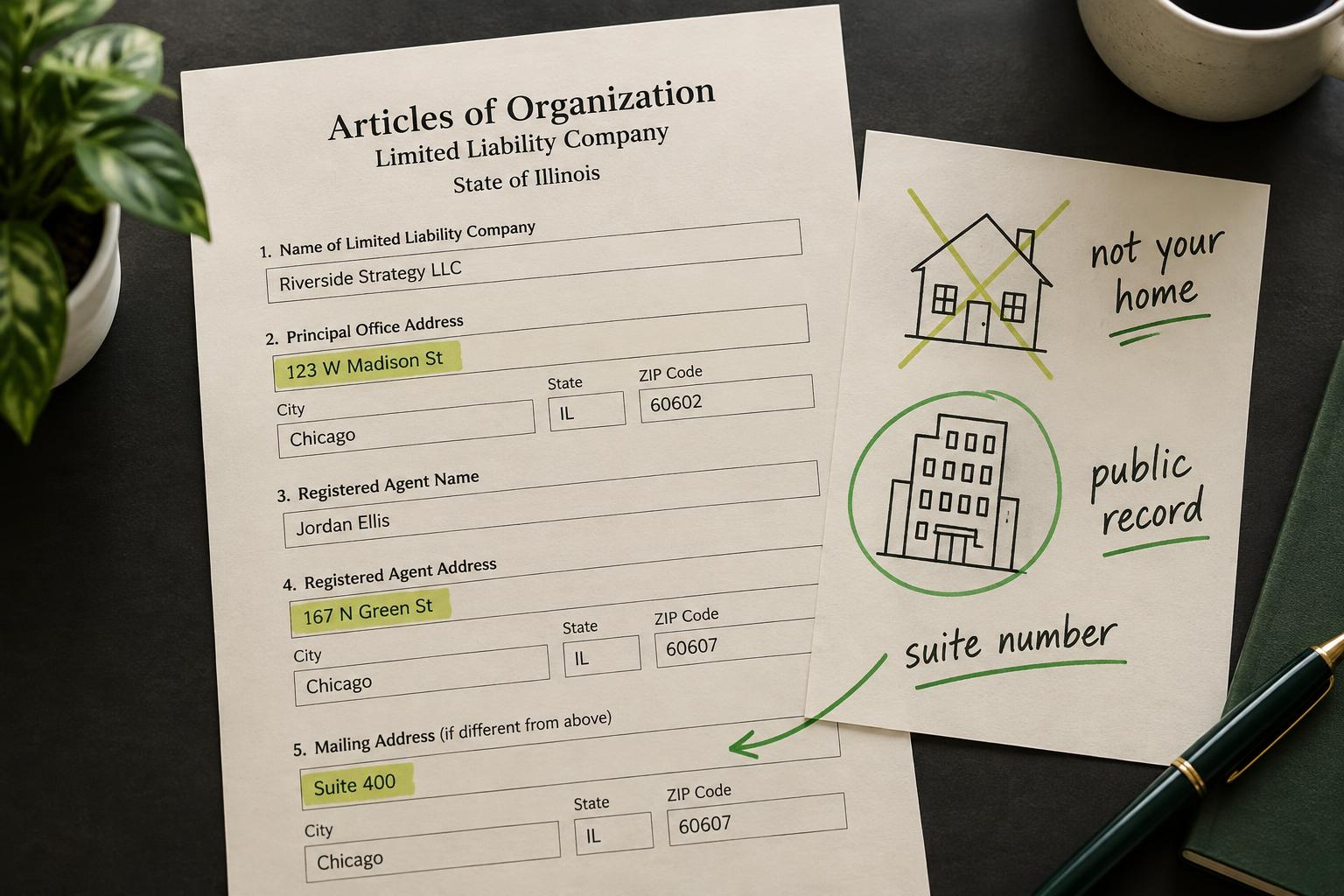
That's where home-based founders stall. Your apartment puts your home on public record and may drag you into home-occupation rules. A P.O. Box is rejected outright: the city and the State of Illinois both refuse them for licenses and LLC registrations.
The answer most Chicago entrepreneurs land on: license the business from a commercial address at a licensed workspace, either a virtual office or a coworking membership at a building already zoned for business. It works. We've watched members do it at 1655 S Blue Island Ave since 2015. One of them, a freight company owner, had the city accept the address for his business license the same week he signed up.
But it works with rules, and the rules decide who qualifies. Here they are, plainly.
The three requirements
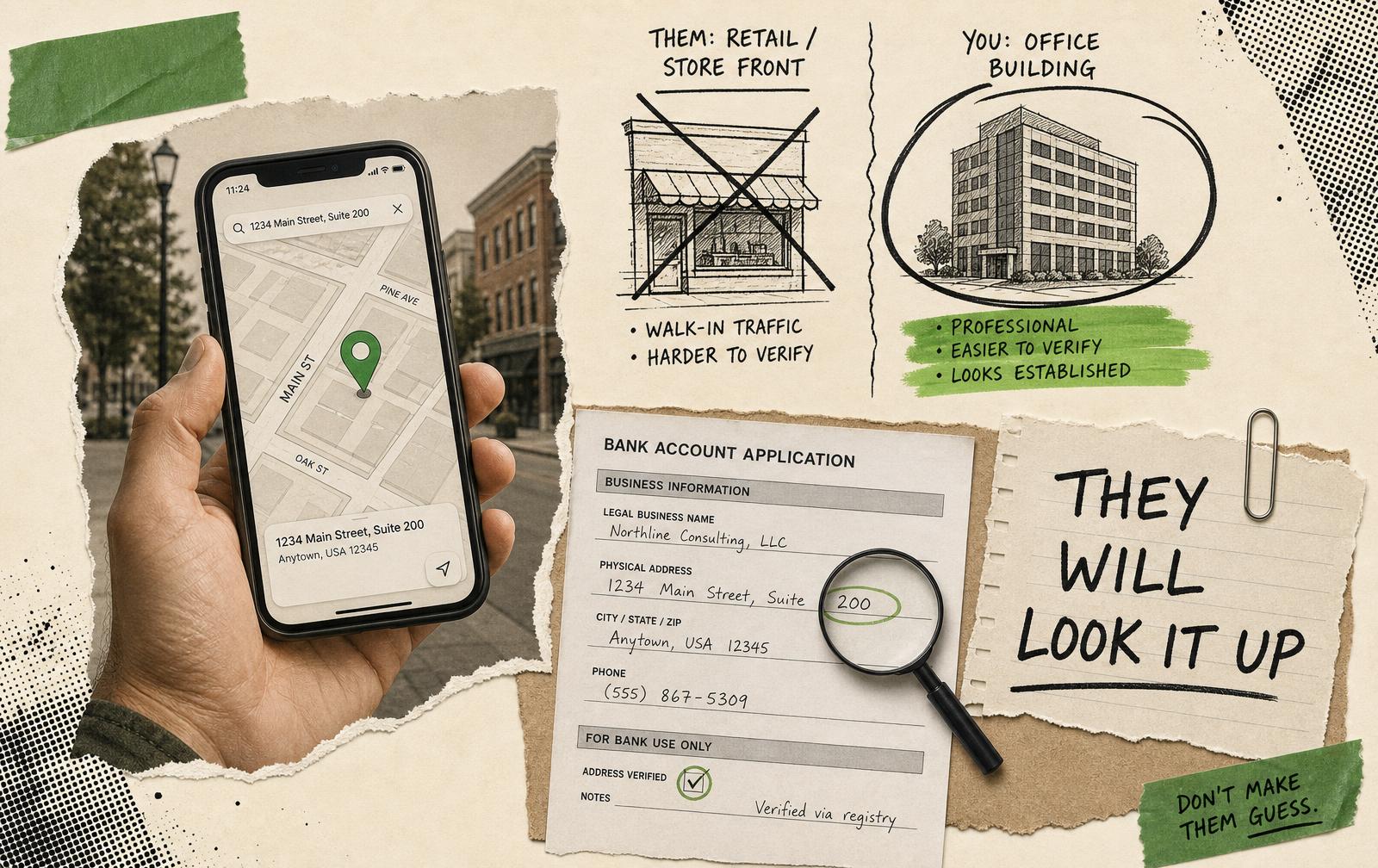
1. It must be a real commercial street address. Not a P.O. Box, not a mail slot. The address has to trace to a physical commercial location. A staffed workspace with a signed agreement in your business's name satisfies this. That agreement is the document licensing staff, banks, and Google all ask to see. The full four-gatekeeper breakdown (state, bank, IRS, Google) is in our virtual address for LLC guide.
2. Your business type must pass zoning at that address. This is the step nobody warns you about: the Department of Business Affairs and Consumer Protection (BACP) reviews every new license application against the Chicago Zoning Ordinance before it's processed. A coworking building is already zoned for office use, so office-type activity passes review cleanly. That's the entire reason this route works.
3. Your license type must not require a facility inspection. Some licenses are tied to the physical place where regulated work happens: a commercial kitchen inspected by the Health Department, a daycare inspected by the Department of Buildings, an auto shop reviewed for fire safety. Those licenses attach to the facility itself, and no office address substitutes for it.
Limited vs. Regulated: the distinction that decides your application
Chicago sorts licenses into three classes under Municipal Code §4-4-016:
- Limited Business License (§4-4-020): the general license for lawful commercial activity that isn't specifically regulated elsewhere in the code. Offices, consultants, agencies, online sellers, professional services. This is the license most virtual office members apply for, and the one an office-zoned address supports cleanly.
- Regulated Business License (Chapter 4-6): activities the city applies extra oversight to (food handling, personal care, lodging, and similar categories). Many of these involve inspections of the actual premises.
- Specific license types under Title 4: industry-specific licenses (liquor, public vehicles, and so on) with their own rules.
If your business fits the Limited class (and most address-seeking businesses do), the path is straightforward. If it fits a regulated or inspected category, be honest with yourself early: the license belongs at your facility, not at ours. We'd rather tell you that before you pay us than after the city tells you.
Who qualifies at a workspace address, and who doesn't
Passes zoning review as office use (the Limited-class crowd):
- Consultants, agencies, and freelancers of every stripe
- Attorneys, accountants, bookkeepers, tax preparers
- E-commerce and online businesses (administration, not warehousing)
- IT, software, and creative studios
- Real estate brokers and property managers (office function)
- Insurance and financial services offices
- Contractors and trades, on the office side: bids, books, mail, client calls (the truck and tools live elsewhere)
- Nonprofits running administration (setting one up? Start here)
Doesn't work from any office address, because the license lives at the inspected facility:
- Food businesses needing a commercial kitchen (Health Department inspection)
- Daycares and childcare (Department of Buildings)
- Auto repair and body shops (Fire Department review)
- Retail with a physical storefront operation
- Any license that requires an on-site inspection of where the regulated work happens
That second list isn't a rejection of your business. It's a boundary of what an office address can legally do for you. Plenty of inspected businesses also keep a mailbox or virtual office for correspondence, banking, and keeping a home address private; the license just stays at the facility.
The home-occupation nuance (read this if you work from your couch)
Here's the honest fine print. If you use a virtual office purely as a mail drop while doing all your work from a Chicago apartment, the city's view is that your home is your principal place of business. That points you at a Home Occupation License, with its own restrictions on employees, signage, and space.
But if you hold a membership that gives you actual use of the workspace, and you genuinely conduct your administrative work there, licensing the business at the workspace address is the compliant route. That distinction is why our virtual office plans come with a signed agreement and real access to the coworking space and amenities, not just a slot in a mail rack. Many members choose exactly this path to keep a home address off the public record while staying inside the lines.
Edge case? Ask BACP directly (312-74-GOBIZ) before you file. Ten minutes on the phone beats a rejected application.
What you'll need alongside the address
- An Illinois registered agent for your LLC or corporation: a person or service at an Illinois street address to receive legal documents. It's a separate requirement from your license address; ours is $95/yr per entity, well under the $100–300 the national services charge.
- Your formation documents: if the LLC doesn't exist yet, form it first; the license application will ask for it.
- Google Business Profile expectations set correctly: a license and a GBP listing are different gatekeepers with different rules; our verification guide covers what Google will and won't accept.
How the application actually goes
1. Secure the address: apply for a virtual office (our review takes about 48 hours) and receive your signed agreement.
2. File your LLC or corporation with the state, using the address, with a registered agent attached.
3. Apply through BACP (online via Chicago Business Direct or at the Small Business Center), naming the commercial address as your business location.
4. Zoning review runs; office-type activity at an office-zoned address passes.
5. License issues; renew on the city's cycle. Keep the agreement current: the address needs to stay real for as long as the license does.
This is an operator's guide, not legal advice. License categories and zoning rules change, and edge cases are real. Confirm your specific situation with BACP at 312-74-GOBIZ. Address plans and what each one includes are on our pricing page.
Frequently asked questions
Can I really get a Chicago business license with a virtual office address?
Yes, if your business is office-type activity (the Limited Business License class) and the building is zoned for office use, which a licensed coworking building already is. What you can't do is substitute any office address for a license that requires inspection of the actual facility, like food service or auto repair.
Will the city reject a coworking address as "not a real office"?
The city reviews the location, not the furniture arrangement. What matters is a real commercial street address, zoning that matches your activity, and documentation (a signed agreement in your business's name) proving your right to use it. That's precisely what a legitimate virtual office provides and what a P.O. Box never can.
Do I need a business license at all?
Most businesses operating in Chicago need one, and "I'm just an LLC" isn't an exemption; the LLC is state-level, the license is city-level. They're two different gatekeepers asking two different questions about the same address.
What's the difference between a Limited and a Regulated business license?
Limited (§4-4-020) is the general license for ordinary commercial activity: offices, consulting, online business. Regulated (Chapter 4-6) covers categories the city watches more closely, which often means facility inspections. Virtual office addresses serve the first class well and the inspected categories not at all.
What about my LLC registration: same address?
It can be. Illinois accepts a real commercial street address for your LLC's principal office, and the same signed agreement supports it. You'll still need a registered agent. That's a statutory role, not an address feature.
What does this cost all-in?
The city's license fee varies by category; the address side is on our pricing page, and the registered agent is $95/yr per entity. The expensive option is getting it wrong and doing it all twice: filing from a P.O. Box, or licensing an inspected business at an office address.