Part of our guide to the business mailbox in Chicago. More guides on this topic
You're expecting a package you actually care about, and you'll be at work when it arrives. Or you run a business from your kitchen table and would rather customers not find your home address in a public filing.
That's the problem a post office box solves. It's a locked compartment inside a postal facility: your own small mailroom, without the overhead of an office.
This guide covers how PO Boxes work, what they cost in 2026, and the one situation where a PO Box will fail you outright. We run a mail operation in Chicago, so we'll also be straight about where a box is the right call and where it isn't.
So, what is a PO Box?
A post office box is a lockable mailbox inside a USPS facility rather than one hanging by your front door. You rent the compartment, USPS delivers your mail into it, and only you or someone you've authorized can open it.
Each box carries a unique number that becomes part of your address. Instead of "123 Main Street," your mail goes to something like "PO Box 1234, Chicago, IL 60608."
The difference that matters is location. Your mail sits inside a secured federal building with controlled access, and many post offices give box holders lobby access outside regular counter hours. So you can collect mail at 6am if that's when your day starts.
How do PO Boxes work?
Once your box is active, delivery works the way you'd expect, just to a different destination.
Carriers sort your mail into your assigned box. You come in during lobby hours, open it with your key or combination, and take your mail. If a package fits, it goes in the box. If it doesn't, USPS holds it at the counter and leaves a pickup notice. Bring the notice and photo ID to collect it.
Private carriers can deliver to a PO Box, with a catch. USPS Street Addressing lets you receive UPS and FedEx shipments by using the post office's street address followed by your box number, rather than the "PO Box" format. Not every location offers it, and you have to opt in. Ask at the counter before you assume a carrier can reach you.
When you move or close the box, USPS will forward mail to a new address for a limited period once you file the paperwork.
Key benefits of having a PO Box
Security. Your mail sits inside a post office rather than in an unlocked box on a porch. Mail and package theft is a real and growing problem in dense neighborhoods, and a box removes that exposure entirely.
Privacy. If you run a business from home, a PO Box keeps your residential address off invoices, business cards, and public-facing materials.
Reliable delivery. Nothing is left on a step. Your mail waits in a locked compartment until you collect it: no missed-delivery slips, no packages sitting in a hallway.
Separation. Business mail goes to one place, personal mail to another. That alone is worth the rental fee for a lot of sole proprietors at tax time.
Why this matters: every one of these benefits is about controlling where your mail lands. What a PO Box cannot do is change what your address is legally allowed to represent, which is where most business owners run into trouble. More on that below.
PO Box costs and pricing factors
Three things set your price: the box size, the ZIP code, and the rental term.
Size options and pricing
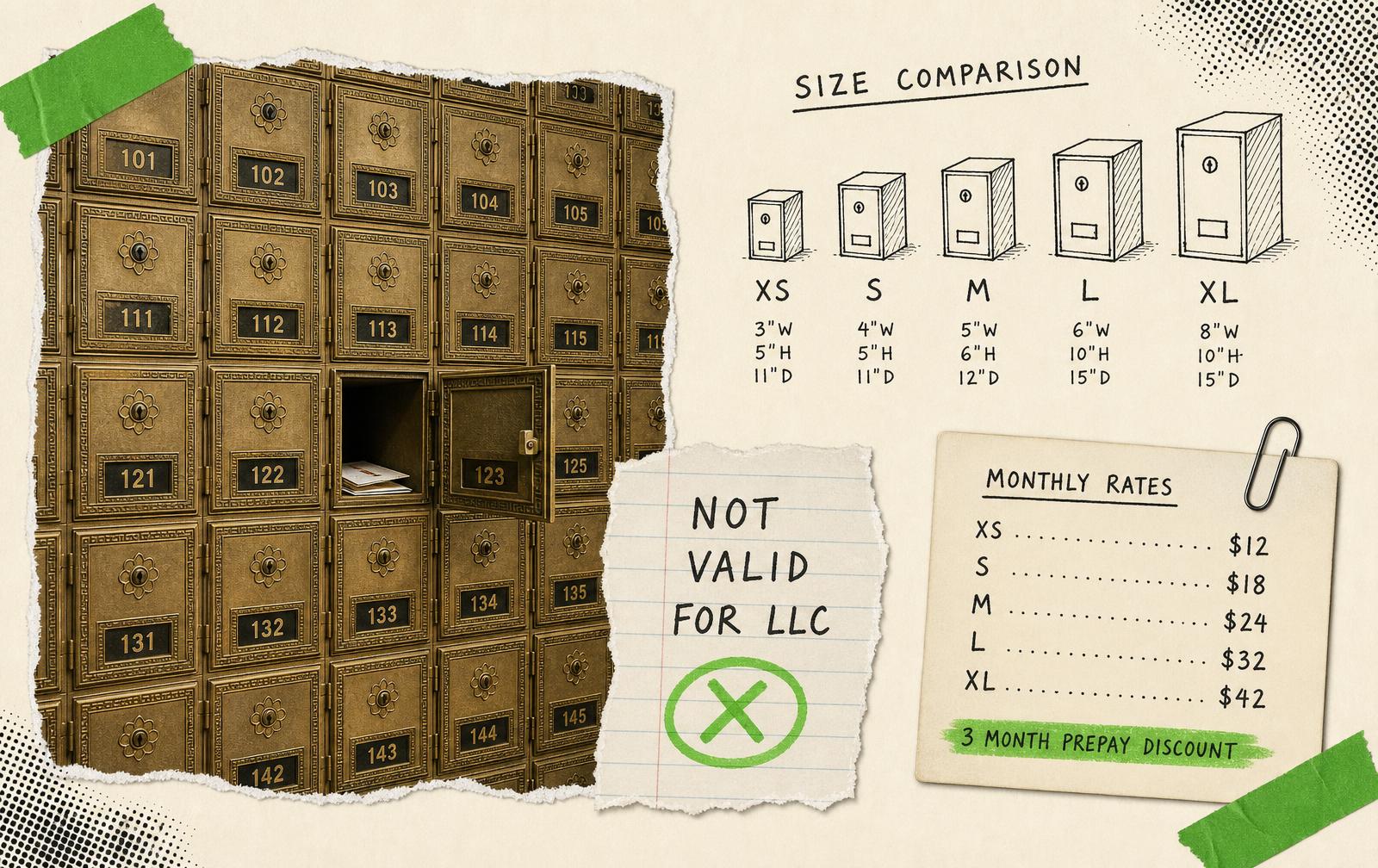
USPS offers five sizes, from extra-small (letters and a few small envelopes) to extra-large (multiple packages). As of 2026, monthly rates run roughly $5 to $113 depending on size and location, with USPS having applied a 2.9% price increase effective January 18, 2026. Committing to a 6- or 12-month term typically saves around 10–15% versus paying short-term.
| Size | Roughly holds | What it suits |
|---|---|---|
| Extra small | Letters, a few envelopes | Personal mail, privacy only |
| Small | Letters plus rolled magazines | Sole proprietors, light mail |
| Medium | Large envelopes, small parcels | Home businesses with some shipping |
| Large | Several packages | Ecommerce sellers |
| Extra large | Multiple or bulky parcels | High-volume shipping |
The spread is wide because location drives price as much as size does. A downtown Chicago box and a rural box of the same dimensions are not priced alike. Check your specific ZIP on the USPS site rather than relying on any published average, including this one.
Also budget for the deposits and replacement fees. Lost keys carry a charge, and some locations require a key deposit up front.
How to set up a PO Box
The process is genuinely simple:
1. Check availability for the sizes at the post offices near you. Popular branches run out of the mid-range sizes.
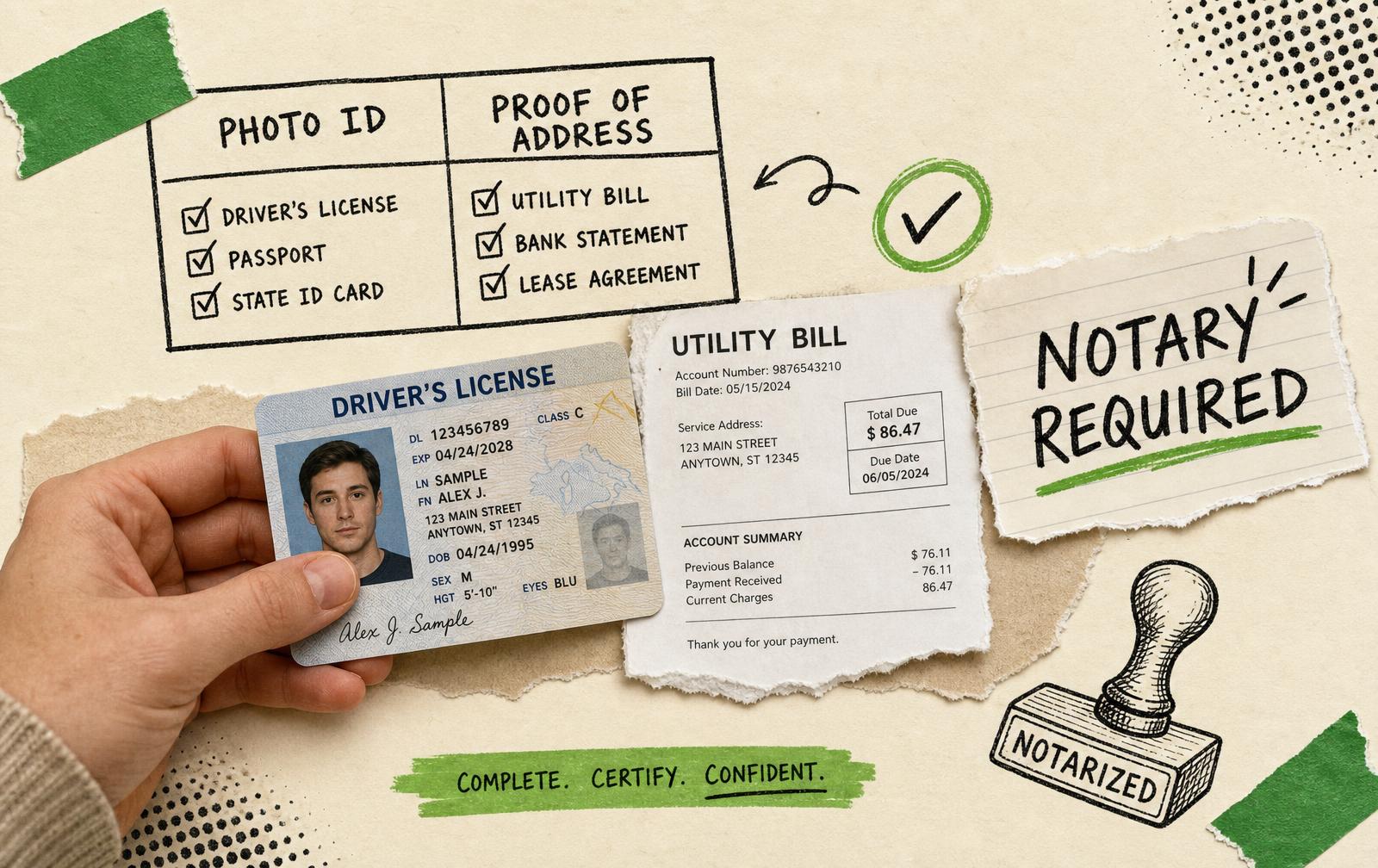
2. Apply, online or at the counter, with two forms of ID. One must be a photo ID; both must show your name, and the address on file must be current.
3. Choose your term. Three, six, or twelve months. Longer terms cost less per month.
4. Pay and collect your keys. Most locations activate the box the same day.
The most common reason an application stalls is an ID mismatch: the name or address on your documents not matching what you wrote down. Bring documents that agree with each other.
Managing your PO Box
Renewal is the thing people get wrong. USPS will notify you before your term expires, but if you let it lapse, your box can be reassigned and your mail returned to sender. Set a calendar reminder for a week before the renewal date.
If you're expecting more volume than usual (a seasonal ecommerce push, say), you can request a size upgrade, subject to availability. And if mail sits uncollected for an extended period, USPS may treat the box as abandoned, so check it on a regular rhythm even when you're not expecting anything.
Who uses PO Boxes?
- Home-based business owners who want their residential address off public materials
- Frequent travelers who need mail held securely for weeks at a time
- Ecommerce sellers managing returns and supplier mail separately from personal post
- People in transition between homes who need a stable mailing address
- Anyone in a building where package theft is a recurring problem
PO Box vs. the alternatives
This is the section that matters most if you're setting up a business, because the differences are legal, not just practical.
| USPS PO Box | Virtual mailbox / CMRA | Street address with an agreement | |
|---|---|---|---|
| Real street address | No (box format) | Yes | Yes |
| Accepts UPS/FedEx | Only with Street Addressing, where offered | Yes | Yes |
| Mail scanned to you | No | Yes | Yes |
| Accepted for LLC registration | Generally no | Sometimes, varies by state | Yes |
| Signed agreement included | No | No | Yes |
| Google Business Profile verification | No | Usually not | Yes, with a signed agreement |
| Someone signs for deliveries | No | Yes | Yes |
The short version: a PO Box is excellent at receiving mail privately and terrible at being an address. If all you need is a secure place for letters, rent the box and stop reading. If your address appears on a state filing or platform listing, confirm that organization’s address requirements before choosing a service.
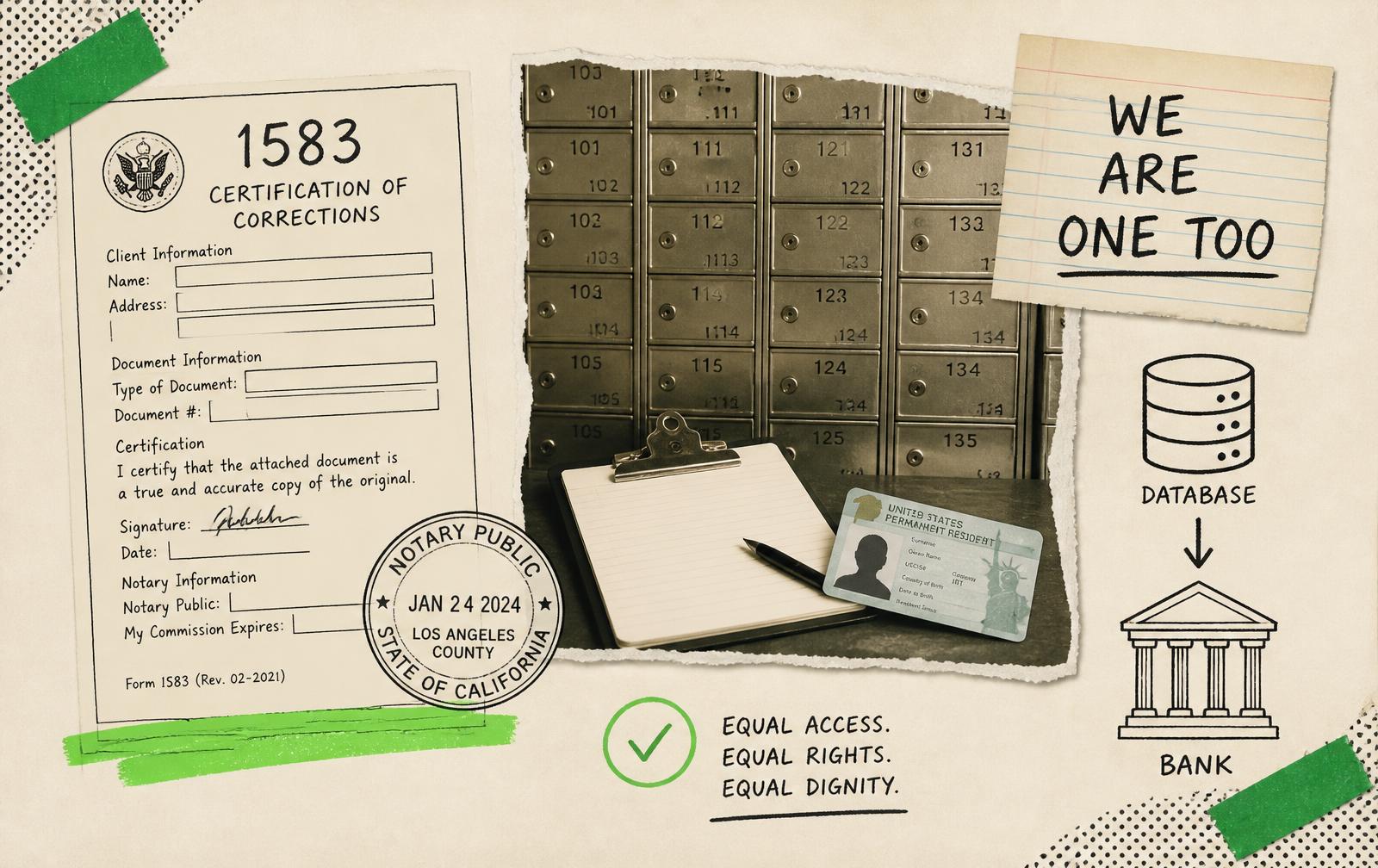
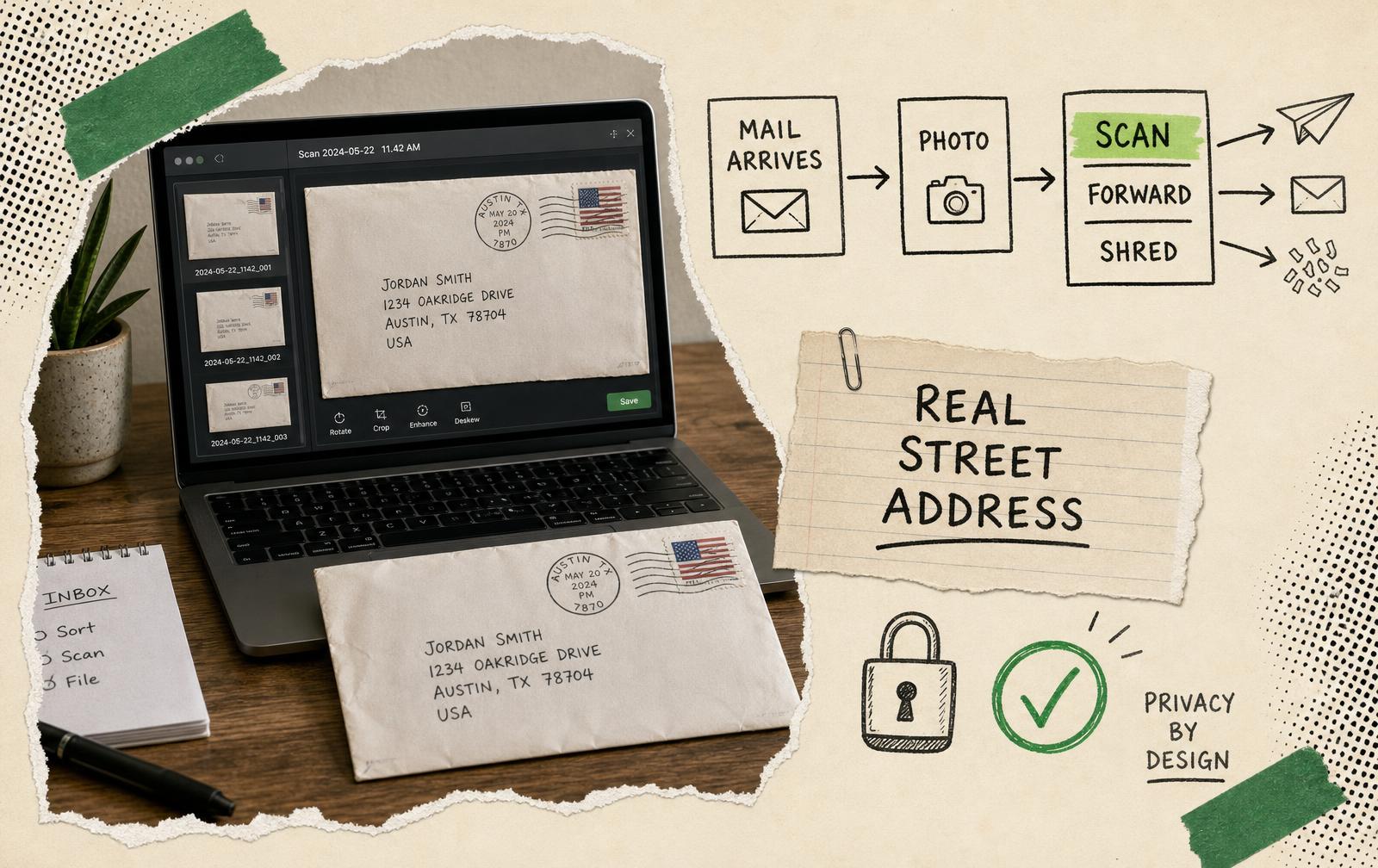
That gap is why services like ours exist. A business mailbox at a commercial address gives you a real street address with mail scanned the day it arrives and forwarded anywhere. A virtual office adds a signed agreement documenting your right to use the address, plus meeting room and member access. Both require a notarized USPS Form 1583 because any commercial mail receiving agency is federally required to verify your identity before handling your mail. We wrote a step-by-step guide to filling it out.
If you want the direct comparison, we put one together: virtual office vs PO box.
Frequently asked questions about PO Boxes
How much does a PO Box cost?
In 2026, USPS PO Boxes run roughly $5 to $113 per month depending on size, ZIP code, and rental term, following a 2.9% price increase that took effect January 18, 2026. Six- and twelve-month terms generally cost about 10–15% less per month than short terms. Check your specific ZIP code on usps.com for exact pricing, since location affects the rate significantly.
Can I use a PO Box address for business registration?
Generally, no. Most states require a physical street address for the principal office and registered agent on LLC or corporation filings, and a PO Box does not satisfy that. Banks may also have separate physical-address requirements. Confirm the rules with the organization receiving your application before choosing an address.
Can private carriers deliver to PO Boxes?
Only where USPS Street Addressing is offered and you've opted in. That service lets you use the post office's street address plus your box number so UPS and FedEx can deliver. Confirm availability at your specific branch. It isn't universal.
What happens if I don't pick up my mail regularly?
Mail accumulates until the box is full, after which USPS may hold items at the counter or return them to sender. Extended neglect can lead the post office to treat the box as abandoned. Check it at least weekly.
What if my preferred box size isn't available?
Availability varies branch by branch and the mid-range sizes go fastest. You can join a waitlist, take a different size temporarily, or check a nearby post office. If you need space for packages specifically, a mailbox service that accepts parcels from every carrier is usually the faster fix.
What happens to mail sent to my old address after I get a PO Box?
File a change of address with USPS and mail will forward for a limited period. Treat that window as time to update the address everywhere it matters (bank, state filings, vendors, customers) rather than as a permanent solution.
Is a PO Box or a virtual mailbox better for a small business?
It depends on what the address has to do. A PO Box is cheaper and fine if you only need to receive letters privately. A virtual mailbox gives you a real street address, accepts packages from all carriers, scans mail so you can read it from anywhere, and can be paired with a signed agreement that works for licensing and registration. If your business address will appear on any official document, the box will not be enough.
Secure your mail the smarter way
A PO Box is a good, cheap tool for one job: keeping your letters out of an unlocked mailbox. Rent one if that's your job to be done.
If your address also has to prove your business exists (on a filing, a license, a bank application, or a Google listing), you need a street address with paperwork behind it. That's what we do at 1655 S Blue Island Ave in Pilsen: a real Chicago address, mail scanned the day it lands, and a signed agreement that holds up where it counts.
Compare mailbox and virtual office plans or talk to our team about which one your setup actually needs.
Follow @lobispace
Guides, Chicago business news and studio work, every week.