Part of our guide to the business mailbox in Chicago. More guides on this topic
A virtual mailbox is a regulated service, not a convenience product. The company handling your mail is a Commercial Mail Receiving Agency, and the federal rules it operates under are the reason you have to prove who you are before a single envelope arrives.
Here is what USPS actually requires, which documents are accepted, and what gets a mailbox suspended.
The rules in short
Any CMRA (whether that is a national platform like Anytime Mailbox or iPostal1, or a local operator like us) has to do five things before handling your mail:
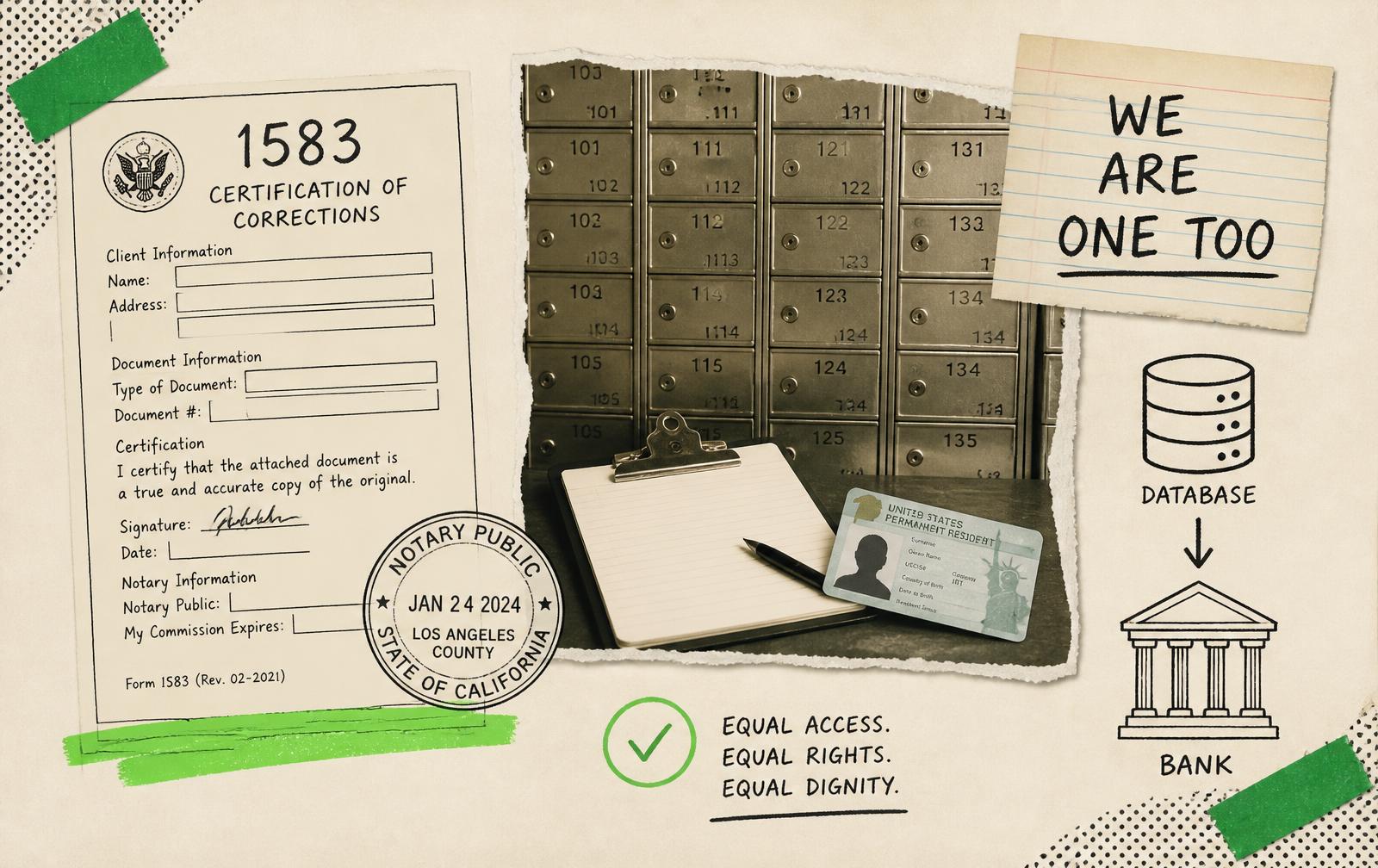
- Collect a completed USPS Form 1583, which authorises them to receive mail on your behalf.
- Verify two forms of your identification, both current and valid.
- Have the form notarised, in person or through an accredited online notary.
- Store and handle your mail securely, under USPS confidentiality standards.
- Keep your records current: changes to your address, your authorised recipients or your contact details have to be reported.
Skip any of these and the provider is not permitted to accept your mail. That is not a policy they chose; it is the condition of their licence.
Which IDs are accepted
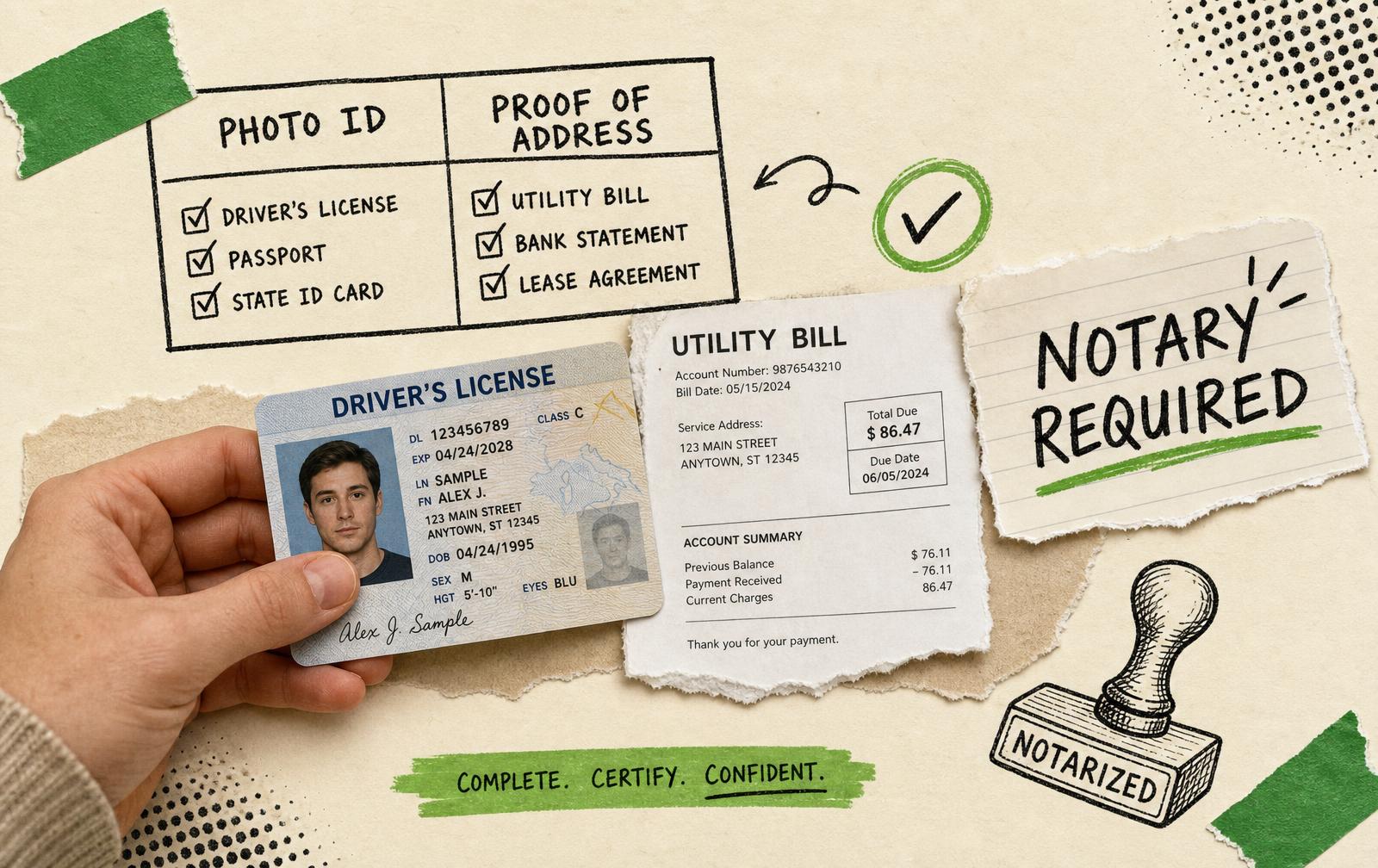
This is where most applications stall, and the rule is stricter than people expect: one document must carry your photo, and the other must confirm your residential address. The same document cannot do both jobs.
Accepted as photo ID
- Driver's licence, US or foreign
- Passport, US or foreign
- US Armed Forces or Uniformed Services ID
- US Permanent Resident Card
- University student ID
- Matricula Consular (Mexico)
- NEXUS card (Canada)
Accepted as proof of address
- Lease, mortgage or deed of trust
- Voter registration
- Vehicle registration
- Home or vehicle insurance policy
Not accepted, no exceptions
- Social Security cards
- Credit cards
- Corporate or employee IDs
- Birth certificates
Why this matters: the single most common rejection is not a wrong answer on the form. It is a name or address that does not match across your two documents. Check that they agree before you book a notary.
The notary requirement
Form 1583 has to be signed in front of a notary public or an authorised USPS agent. There is no way around it.
Where to get it done:
- Your bank or credit union. Usually free if you hold an account.
- Shipping centres. FedEx, UPS and similar often have a notary on site, typically $20–$30.
- Online notary platforms. Remote notarisation is accepted, and it is the fastest route if you are not local.
- Law offices. Most have a notary on staff.
- Your mailbox provider. Many, including us, let you sign on site. At Lobi Space you sign at the front desk in front of our staff.
For the form itself, walk through our step-by-step Form 1583 guide, which covers each section and the mistakes that cause delays.
What this means for your business
The address is only as good as its paperwork. A compliant mailbox gives you a real street address you can put on a website, an invoice and a business card. It does not include a signed agreement documenting your right to use the address. That agreement is part of a virtual office, not a mailbox.
Your home address stays private. Public filings, marketing and deliveries point somewhere else.
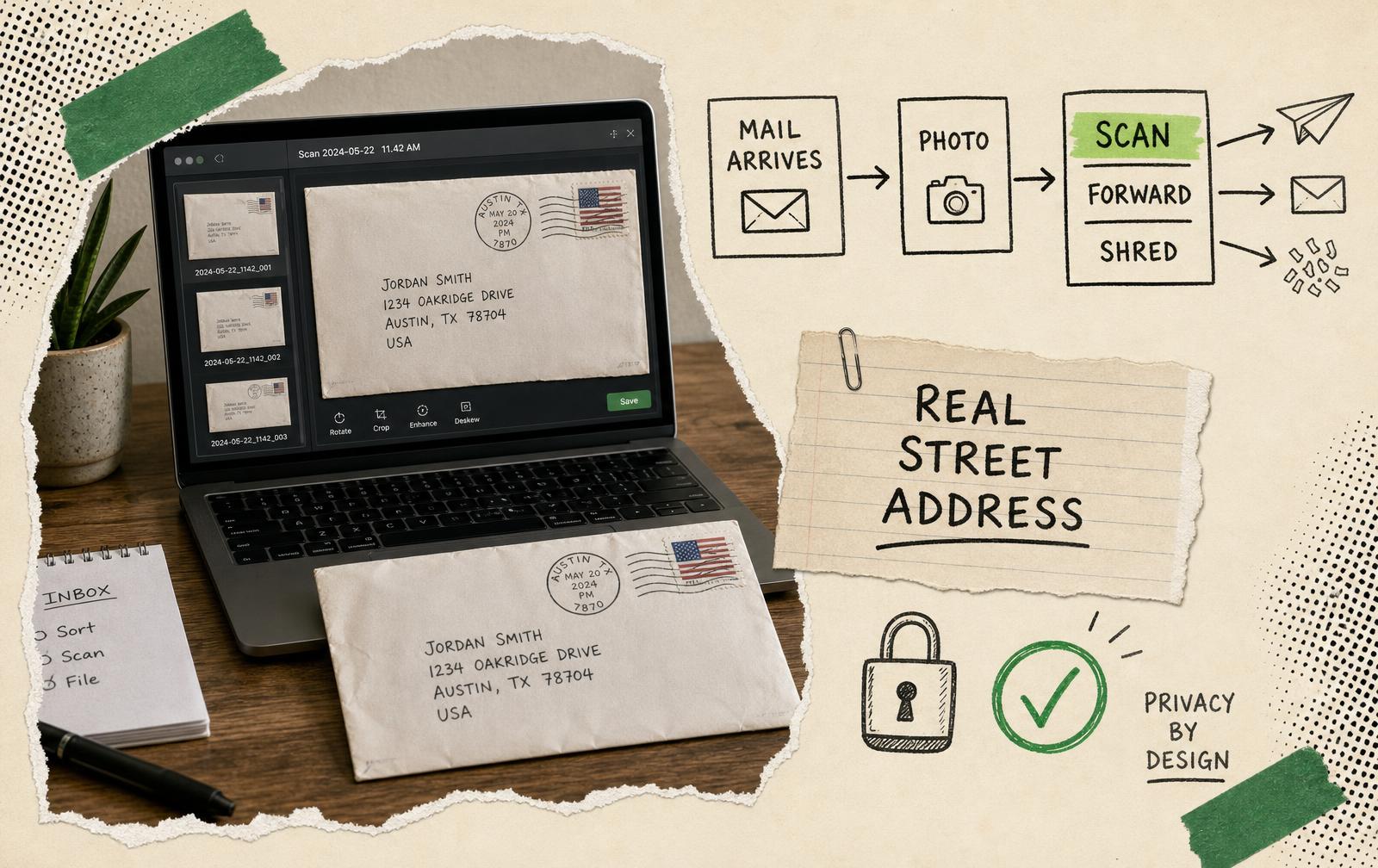
Your mail becomes portable. Scanning, forwarding and shredding mean the physical location stops mattering to how you work. See mail scanning, forwarding and on-demand pickup.
Keep the 1583 current. If you add a business partner as an authorised recipient, or move house, file an updated form. An out-of-date 1583 is the quiet reason services get interrupted.
Frequently asked questions
What is USPS Form 1583 and why is it required?
It is the authorisation that permits a Commercial Mail Receiving Agency to accept mail addressed to you. USPS requires it so that every mailbox is tied to a verified, identifiable person: a fraud-prevention measure. Without a completed, notarised form on file, your provider cannot legally accept your mail.
What identification do I need?
Two valid documents. One must be a photo ID such as a passport or driver's licence. The other must verify your residential address, such as a lease, voter registration or insurance policy. One document cannot serve both purposes, and Social Security cards, credit cards and birth certificates are not accepted.
Can I complete Form 1583 online?
Yes, where your provider supports remote online notarisation. The form still has to be notarised; the notary is simply attending by video rather than in person.
What happens if I do not submit or notarise the form?
Your provider cannot accept mail for you, and any existing service can be suspended. This is a federal requirement rather than a provider preference, so there is no discretion involved.
Are virtual mailboxes secure?
A compliant CMRA operates under USPS confidentiality standards, receives mail into a staffed commercial building, and handles it only on your instruction. That is materially more secure than an unattended residential mailbox.
Can I receive packages at a virtual mailbox?
Generally yes. Most providers, including us, accept parcels from every carrier rather than USPS alone. Size limits and storage windows vary, so check your provider's terms. Ours includes 30 days of free storage.
Does a virtual mailbox work for registering an LLC?
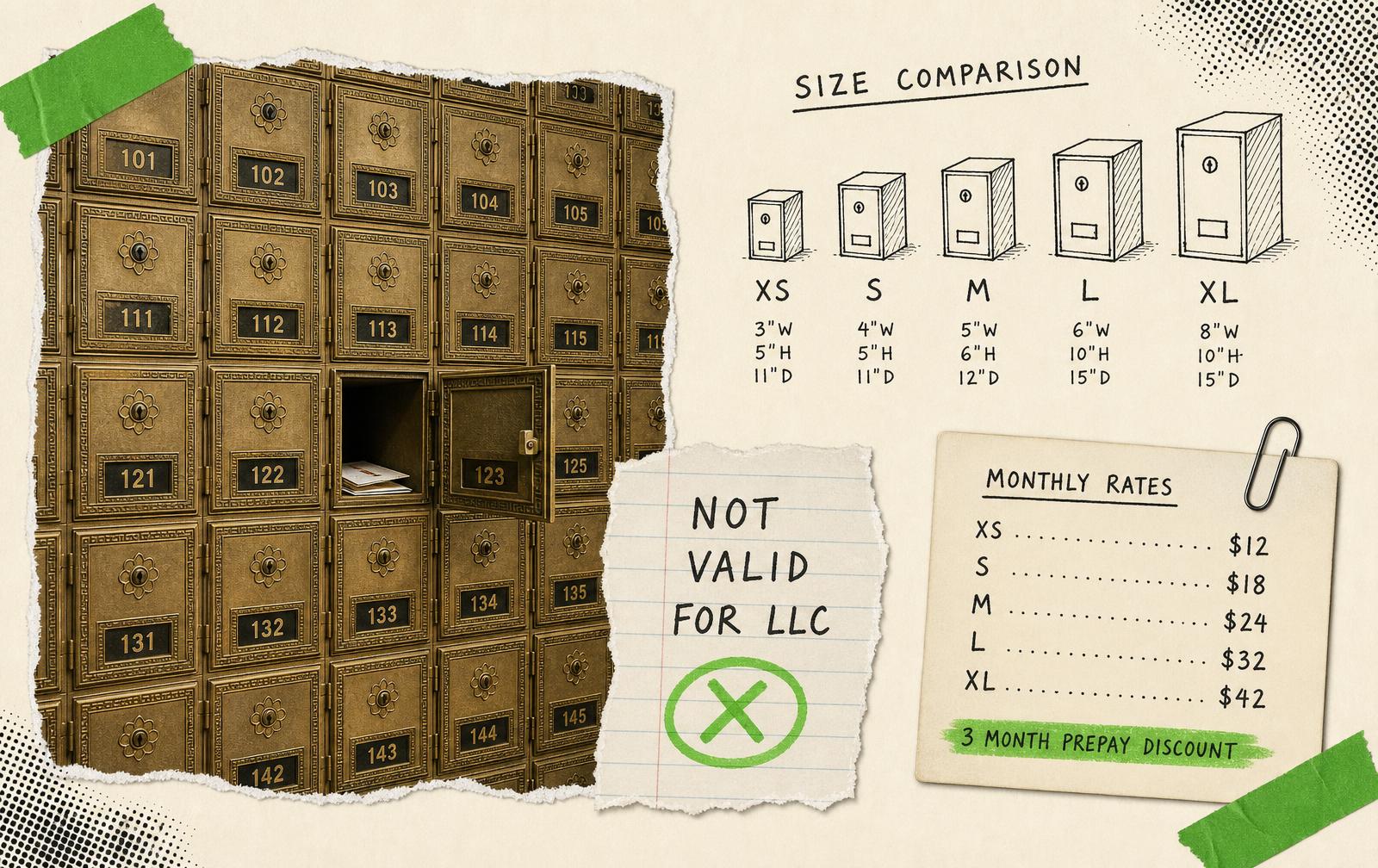
A virtual mailbox is mail only and does not include a signed agreement. Confirm the address and documentation requirements directly with the organization receiving your filing. Our guide on what a PO Box can and cannot do covers the distinction in detail.
Set it up properly the first time
The compliance step takes about fifteen minutes when your documents line up, and a fortnight when they do not.
Bring two matching IDs, notarise the form, and keep it current. If you would rather have it handled in one visit, we notarise on site: compare mailbox and virtual office plans or talk to our team.
Follow @lobispace
Guides, Chicago business news and studio work, every week.