Part of our guide to the Business Suite. More guides on this topic
Nobody needs a business plan until somebody asks for one. Then they need it by Friday.
The asker is usually a lender, an investor, a landlord or a grant committee. What they want is not prose, it is evidence you understand your numbers. That is the job LivePlan is built for. We see the request constantly from this building: a member gets an SBA loan meeting, a grant deadline, a serious investor conversation, and suddenly "I should write a plan someday" becomes "I need financial projections by Thursday."
Here is what LivePlan actually does, what its users say, what it costs, and (just as useful) when a free template does the same job.
*Disclosure: the LivePlan links below are affiliate links, meaning Lobi Space may earn a commission if you subscribe. The verdict below is unchanged by that.*
What LivePlan is
LivePlan is guided business-plan software from Palo Alto Software, the company behind decades of business-planning tools. Instead of a blank document, you answer structured prompts section by section, and it assembles a lender-ready plan.
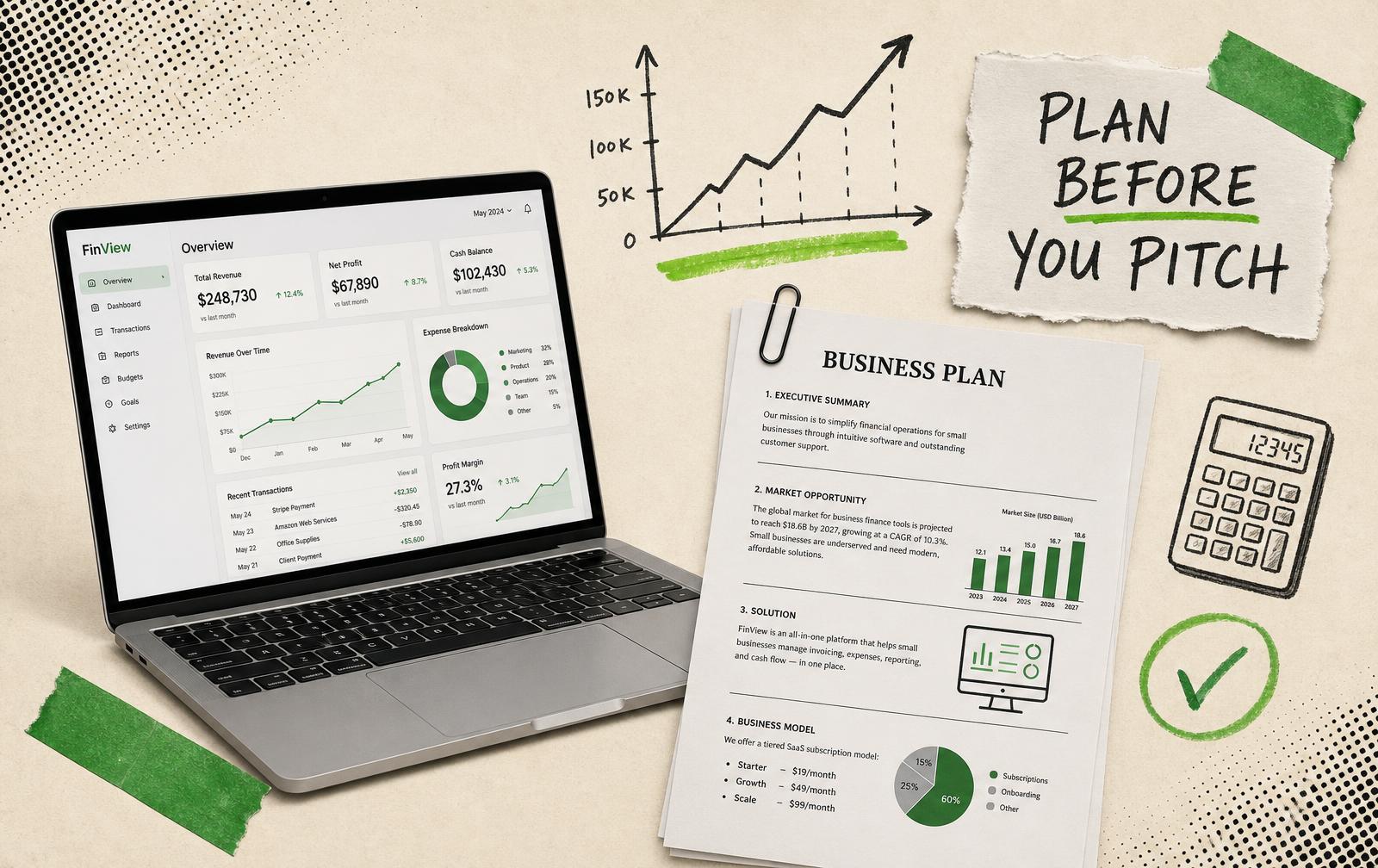
Its real differentiator is the financial side. Most people do not stall on the "describe your company" sections. They stall on the five-year projection spreadsheet. LivePlan replaces that spreadsheet with guided forms: you enter what you charge, how many customers you expect, what you pay in rent and wages, and it generates the income statement, cash flow and balance sheet a lender expects, formatted the way they expect them.
The pieces that matter:
- Step-by-step structure. Every section a lender expects, in the order they expect it, with examples from real plans to unstick you.
- Financial forecasting without spreadsheet surgery. Revenue models, payroll, expenses and cash flow built through forms; the statements generate themselves and stay internally consistent. Change a number and everything downstream updates.
- A one-page pitch view. The summary format that gets read when the full forty pages do not.
- Actuals tracking. Connect QuickBooks and compare plan against reality month by month: the feature that keeps the subscription useful after the loan closes, and the one that turns a document into a management habit.
- Scenario planning. What happens at 70% of projected revenue? At 130%? Lenders ask exactly this question, and having the answer pre-built reads as competence.
What actual users say
LivePlan holds roughly 4.2 out of 5 on G2 and 4.5 on Trustpilot, with hundreds of verified reviews on Capterra.
The most specific praise, repeated across platforms: people without financial backgrounds produce plans they actually present to lenders and investors. The automated forecasting draws the most detailed positive commentary: reviewers describe getting projections done in an evening that had been blocking them for months. Phone support gets named as responsive and genuinely helpful during setup, which is rarer in SaaS than it should be.
The complaints cluster in two places, and they are worth knowing before you subscribe. First, billing: auto-renewal and refund handling is the most repeated negative across Trustpilot and Capterra. Set a calendar reminder for your renewal date the day you subscribe. Second, data plumbing: there is no clean way to import your own Excel or Google Sheets financials, and reviewers report friction with the Xero integration (QuickBooks fares better). If your financial life lives in carefully built spreadsheets, expect re-entry work rather than import.
What it costs
LivePlan currently runs $20/month (or $15/month billed annually) for Standard and $40/month ($30/month annually) for Premium, with a 35-day money-back guarantee. Premium adds the forecasting depth, scenarios and actuals-vs-plan dashboard. For most people that is the point of paying at all. If you are buying LivePlan for the financials, Premium is the real product.
Check current pricing here. A few dollars shift between promotions.
LivePlan vs the alternatives
| Free SBA template | Generic AI chat | LivePlan | |
|---|---|---|---|
| Cost | $0 | $0–$20/mo | $15–$40/mo |
| Plan structure | Yes, static | Yes, generic | Yes, guided with examples |
| Real financial statements | You build them | It fakes them plausibly | Generated and internally consistent |
| Updates when numbers change | Manual | Start over | Automatic |
| Actuals vs plan tracking | No | No | Yes (Premium) |
| Lender familiarity | High | Low | High |
The honest comparison with AI chat tools: they produce plans that read fine and hold no real financial logic. Change one assumption and nothing downstream updates, because there is no model underneath. Just sentences. Lenders do not reject plans for bad prose; they reject them for financials that fall apart under three questions.
Who actually needs it
You are applying for money. SBA lenders, banks and most grant programs want the full document with credible financials. This is the clearest yes, and the 35-day guarantee covers a single application cycle if that is truly all you need.
You have partners or investors to keep aligned. A shared plan with monthly actuals beats a forgotten PDF in a drive folder.
Numbers are not your first language. The guided forecasting is the difference between a plan with real projections and a plan with hopeful guesses. Reviewers without finance backgrounds confirm this is where the tool earns its fee.
Who can skip it
If you need a plan once, for your own clarity, a free SBA template and a focused weekend gets you most of the way. If you already live in spreadsheets and your models work, LivePlan's guided structure will feel slower than your own system. The import friction reviewers describe will annoy you.
The honest framing: LivePlan is not buying you a document, it is buying you the discipline of a financial model you will actually maintain. If you will not open it after week one, save the subscription.
Getting the most from it if you subscribe
- Start with the numbers, not the narrative. The financial chapters unblock everything else: once the model exists, the writing describes it.
- Connect your accounting from day one so actuals-vs-plan becomes automatic rather than a chore.
- Build the downside scenario before anyone asks. "Here is the plan at 70% of projections and we still cover debt service" is the single most credibility-building page in a loan meeting.
- Use the one-page pitch as your default share. Send the full plan only when requested.
- Diary the renewal date. The billing complaints are real; make auto-renewal a decision, not a surprise.
The bottom line
For anyone raising money or running a business with partners, LivePlan earns its $15–$30 a month, and its user reviews back that up specifically on the forecasting. Go in knowing the two real weaknesses (billing surprises and spreadsheet import) and manage both on day one.
Start with the annual Standard plan, upgrade to Premium if the forecasting pulls you in, and treat the 35-day guarantee as a real trial.
And when the plan works, when the LLC gets filed and the bank account opens, the address on those documents matters more than people expect. That part we can help with. See our guide to setting up an Illinois LLC for the filing steps and the $75 annual report everyone forgets.
Frequently asked questions
Can't I just ask ChatGPT to write my business plan for free?
You can, and it will produce something that reads fine and holds no real numbers. There is no financial model underneath, just plausible sentences. Lenders do not reject plans for bad prose; they reject them for financials that collapse under three questions. LivePlan's value is the guided forecasting, not the writing. If you only need writing, use the free option.
Will a lender actually read it?
They read the numbers, the one-page summary, and enough of the rest to check you are serious. That is precisely why the financial statements matter more than the forty pages around them, and why software that builds coherent, internally consistent statements earns its fee.
Am I paying $30 a month to procrastinate?
That is a real risk with all planning tools: the plan becomes the product instead of the business. The test is simple: if you have not opened it in a month, cancel it. The 35-day guarantee exists for exactly this discovery.
What if my numbers are guesses?
Every forecast is a guess. The difference between a guess and a projection is showing your assumptions (price times customers times growth rate) so a lender can argue with your inputs instead of dismissing your output. LivePlan forces the assumptions into the open, which is most of what makes it useful.
What do LivePlan's own users complain about?
Two things, consistently. The first is billing: auto-renewal and refund handling is the most repeated negative on Trustpilot and Capterra. The second is data import, since there is no clean way to bring in existing Excel or Sheets models and the Xero sync draws complaints. Both are manageable if you know going in: diary the renewal date, and expect to re-enter numbers rather than import them.
Is a business plan even necessary anymore?
For your own clarity, a one-pager often suffices. The moment money enters (a bank, the SBA, a grant committee, a landlord, a serious partner), someone will ask for the document, and they will ask on their timeline, not yours.
Follow @lobispace
Guides, Chicago business news and studio work, every week.